
Pakistan’s electric vehicle market is transitioning from an emerging segment to a competitive battleground, with Chinese automakers, local assemblers, and technology companies racing to establish an early lead. Unlike the conventional automobile market—historically dominated by Japanese brands—the EV landscape is far more diverse, with manufacturers competing on pricing, technology, charging infrastructure, and local assembly plans.
BYD: The Global Leader Betting Big on Pakistan
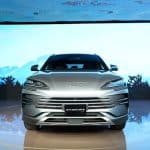
Chinese EV giant BYD has quickly positioned itself as one of the strongest contenders in Pakistan’s new-energy vehicle (NEV) market. Through its partnership with Mega Motor Company, a subsidiary of HUBCO, the company has announced plans to begin local vehicle assembly in Pakistan, significantly reducing costs and improving availability. Reuters has reported that the plant is expected to have an annual production capacity of around 25,000 units, while BYD aims to capture 30–35% of Pakistan’s EV and plug-in hybrid market.
BYD’s competitive strengths include:
- Industry-leading Blade Battery technology
- Strong global EV manufacturing scale
- Competitive pricing through local assembly
- Wide product portfolio ranging from compact SUVs to premium sedans and pickup trucks
The company is also working with local partners to expand charging infrastructure, addressing one of Pakistan’s biggest barriers to EV adoption.
MG Pakistan: The First Mover Advantage
MG was among the earliest brands to introduce modern electric vehicles in Pakistan, launching the ZS EV before the market had developed meaningful charging infrastructure. The company has since expanded into plug-in hybrid vehicles (PHEVs), providing an alternative for consumers concerned about charging availability.
MG’s strengths include:
- Established dealership and after-sales network
- Strong brand recognition
- Experience in both EVs and hybrid vehicles
- Nationwide service infrastructure
However, increasing competition from newer Chinese brands is likely to intensify pressure on MG to introduce more affordable models and expand its electric portfolio.
Deepal: Technology-Focused Premium Positioning
Deepal, backed by Changan Automobile, is targeting Pakistan’s premium EV segment with feature-rich electric SUVs and advanced driver-assistance technologies. The brand is positioning itself as a technology-driven alternative for urban professionals seeking premium electric mobility.
Its strengths include:
- Modern vehicle architecture
- Long driving range
- Advanced connectivity features
- Premium interior design
Deepal is expected to compete directly with BYD, MG, and other premium Chinese manufacturers entering Pakistan.
Honri, Dongfeng and Emerging Urban EV Brands
Smaller manufacturers such as Honri and Dongfeng are targeting first-time EV buyers with compact city cars priced below traditional electric SUVs. These models focus on affordability, lower running costs, and urban commuting, helping broaden EV accessibility in Pakistan.
This segment is expected to grow rapidly as consumers seek economical alternatives for daily travel, particularly in major cities.
Local Players: Electric Two-Wheelers Lead the Way
While global manufacturers compete in passenger cars, local companies are driving innovation in electric motorcycles and light commercial vehicles.
Manufacturers such as Jolta Electric, Metro Electric, and several emerging startups are focusing on:
- Affordable electric motorcycles
- Delivery and logistics vehicles
- Battery-swapping solutions
- Local assembly and manufacturing
Given that motorcycles account for the majority of Pakistan’s vehicle fleet, this segment is likely to witness the fastest adoption over the next decade.
Competitive Outlook
Competition in Pakistan’s EV market is expected to intensify over the next five years as more international brands establish local assembly operations and domestic manufacturers expand production. The key differentiators are unlikely to be vehicle price alone.
Manufacturers that succeed will likely be those that can offer:
- Reliable after-sales service
- Extensive charging networks
- Competitive financing options
- Long battery warranties
- High levels of vehicle localization
- Strong digital connectivity and software support
As government incentives continue and consumer awareness improves, Pakistan’s EV market is expected to evolve from an early-adoption phase into a mainstream automotive segment. Increased competition should lead to lower prices, greater product variety, and faster innovation, ultimately benefiting consumers while supporting the country’s transition toward cleaner transportation.
- Al-Ghazi Tractors Unveils NH 750 and NH 85-56 at Pakistan Auto Show
- BYD Unveils the Future at PAPS 2026 with New Lineup, Introducing Pakistan’s First Locally Assembled BYD Sealion 6
- LIIBS 2026 Concludes with Framework on “The Next Move” for Economy, Technology, and Global Positioning
- Non-Life Insurance Market Worth $1 Billion in Pakistan, Says Aminuddin
- Large-Scale Manufacturing Records 3.03% Growth in July 2026