
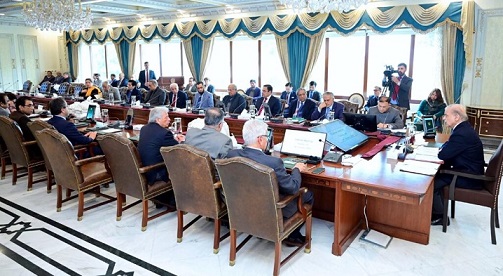
The federal cabinet has given its approval to the power division’s recommendation to revise the negotiated settlement agreements with 14 Independent Power Producers (IPPs). This strategic move aims to significantly reduce electricity costs and is expected to save the national exchequer a substantial Rs.1.4 trillion.
Following discussions with the 14 Independent Power Producers (IPPs) under the revised agreements, the federal cabinet has approved a substantial reduction of Rs.802 billion in terms of profit and costs associated with these IPPs. Additionally, Rs.35 billion in excess profits from previous years will be deducted from these IPPs.
It was told in the meeting that of these IPPs, 10 operate under the 2002 Power Policy, while four others were established under the 1994 Power Policy. Besides, an agreement with one IPP from the 1994 policy has been canceled.
These revised agreements are projected to save the government Rs.1.4 trillion over their applicable duration, with annual savings of Rs.137 billion, that will benefit power consumers, the meeting was informed.
On the occasion, the prime minister lauded this achievement, highlighting that it would reduce circular debt, lower electricity prices, and lead to significant national savings.
On conclusion of successful revised agreements, he appreciated the performance of the Power Minister, Advisor, and Secretary, and the members of the Task Force that was established in this regard.
- Tetra Pak calls for urgent action to strengthen Pakistan’s food systems amid nutrition crisis
- Mobilink Bank and SDPI Call for Gender-Responsive Climate Finance for Pakistan’s Women Farmers
- 800+ Technology & Cybersecurity Leaders to Unite at Global CIO Summit & Awards Roadshow in Pakistan
- “PM Apna Ghar Scheme” spurs 117% surge in housing finance, Rs313bn loans approved
- Ufone and Telenor Pakistan secure nine awards at Dragons of Pakistan 2026