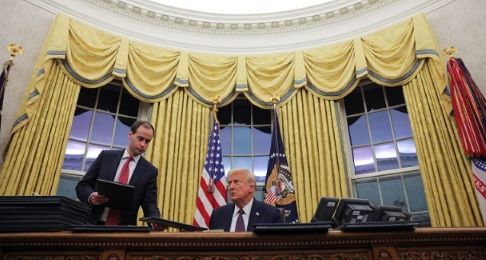
In a dramatic shift in trade policy, President Donald Trump announced on Wednesday a temporary reduction in tariffs for numerous countries, easing the burden of hefty duties previously imposed. However, the move came with a sharp escalation in pressure on China, as tariffs for the nation were raised significantly. The announcement sent shockwaves through global markets, propelling U.S. stocks to impressive gains.
Trump’s turnabout, which came less than 24 hours after steep new tariffs kicked in on most trading partners, followed the most intense episode of financial market volatility since the early days of the Covid-19 pandemic.
The upheaval erased trillions of dollars from stock markets and led to an unsettling surge in US government bond yields that appeared to catch Trump’s attention.
“I have authorised a 90 day PAUSE, and a substantially lowered Reciprocal Tariff during this period, of 10 per cent, also effective immediately,” Trump posted on Wednesday on social media.
“I saw last night that people were getting a little queasy,” Trump told reporters following his announcement. “The bond market right now is beautiful.”
Since returning to the White House in January, Trump has repeatedly threatened an array of punitive measures on trading partners, only to revoke some of them at the last minute.
The on-again, off-again approach has baffled world leaders and spooked business executives, who say the uncertainty has made it difficult to forecast market conditions.
In the latest twist, Trump said he would suspend targeted tariffs on other countries for three months to allow time for US officials to negotiate with countries that have sought to reduce them.
But he kept the pressure on China, the No. 2 provider of US imports. Trump said he would raise the tariff on Chinese imports to 125 per cent from the 104 per cent level that took effect at midnight, further escalating a high-stakes confrontation between the world’s two largest economies.
The two countries have traded tit-for-tat tariff hikes repeatedly over the past week.
Trump’s reversal on the country-specific tariffs is not absolute.
A 10 per cent blanket duty on almost all US imports will remain in effect, the White House said. The announcement also does not appear to affect duties on autos, steel and aluminum that are already in place.
US Treasury Secretary Scott Bessent shrugged off questions about market turmoil and said the abrupt reversal rewarded countries that had heeded Trump’s advice to refrain from retaliation. He suggested Trump had used the tariffs to create “maximum negotiating leverage for himself.”
“This was his strategy all along,” Bessent told reporters. “And you might even say that he goaded China into a bad position. They responded. They have shown themselves to the world to be the bad actor.”
Bessent is the point person in the country-by-country negotiations that could address foreign aid and military cooperation as well as economic matters. Trump has spoken with leaders of Japan and South Korea, and a delegation from Vietnam was due to meet with US officials on Wednesday.
Bessent declined to say how long negotiations with the more than 75 countries that have reached out might take.
Trump said a resolution with China was possible as well. But officials have said they will priorities talks with other countries.
- Mobilink Bank, Depilex Smileagain Foundation Empower Women Burn Survivors through Sustainable Mobility
- BYD Expands Footprint in Karachi with New Dealership Amid Rising NEV Demand
- Sabri Sisters Take Center Stage in New York’s Times Square as Spotify’s EQUAL Pakistan Ambassadors for Q2 2026
- Saudi investors show strong interest in Pakistani handmade furniture: PFC
- SECP Approves Pakistan’s First Digital Lending Product for Women-Led MSMEs