
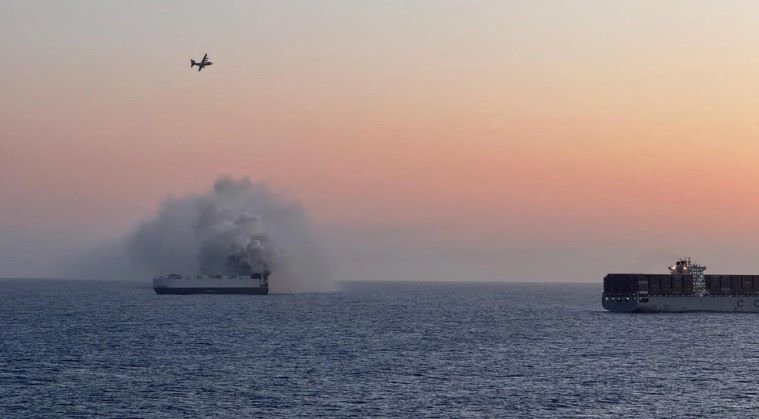
EV fires are tougher to control due to thermal runaway, intense heat, and toxic fumes.
A cargo ship transporting approximately 3,000 vehicles to Mexico was abandoned in the Pacific Ocean after a fire broke out on Tuesday, June 3. The incident underscores the increasing risks associated with electric vehicle (EV) transportation, as lithium-ion battery fires can be particularly challenging to control.
The cargo ship Morning Midas caught fire approximately 300 miles south of Adak Island, Alaska, according to the U.S. Coast Guard. Thick smoke was first spotted billowing from one of the decks, raising alarms about the vessel’s safety. The ship, carrying around 800 electric vehicles (EVs), was abandoned as the fire intensified, Zodiac Maritime confirmed in a statement.
The crew initiated firefighting procedures but the blaze could not be brought under control, Zodiac said. Responders were being deployed to support salvage and firefighting operations, it added. A spokesperson for the firm declined to comment on who owns the vehicles.
The US Coast Guard evacuated all 22 crew members, transferring them to a nearby merchant ship.
The Morning Midas, a 46,800-tonne cargo vessel built in 2006 by China’s Xiamen Shipbuilding Industry, set sail from Yantai on May 26, according to Bloomberg’s ship-tracking data. Before its departure, the ship made stops at two major Chinese ports—Nansha in the south and Shanghai—highlighting its extensive route before encountering trouble at sea.
Demand for lithium-ion batteries, including in EVs, is bringing a new risk to the global shipping industry, particularly given the value of the vehicles on board the largest car-carrying vessels, according to a report last month by insurance giant Allianz.
Fires involving EVs are often harder to extinguish and more dangerous to fight. The conditions of a tightly packed car-carrying cargo ship lead to limited ventilation, which can rapidly intensify heat. The confined, steel-lined environment makes fire suppression and rescues significantly more dangerous.
Additionally, when an EV burns, it does so for longer and the fire gets hotter. The flames can end up accelerating through chain reactions and spiraling out of control quickly, a process called thermal runaway. EV fires can take up to 8,000 gallons of water to cool the lithium-ion batteries.
- Ufone and Telenor Pakistan secure nine awards at Dragons of Pakistan 2026
- PSW, TDAP step up efforts to empower women entrepreneurs for global trade
- PTCL secures five awards at ‘Dragons of Pakistan 2026’
- SECP removes barriers to opening stock market accounts
- Mobilink Bank, Yango Pakistan partner to enable Shariah-compliant financing and Embedded Insurance for Registered Drivers