
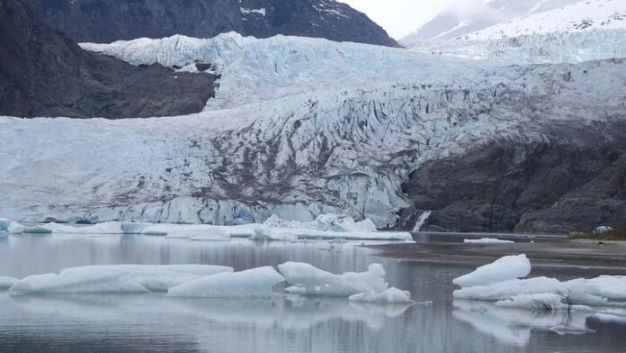
Often referred to as “Third Pole,” the glaciers of Gilgit-Baltistan, are the most stunning natural wonders of Pakistan. These icy giants feed Indus River and its tributaries, serve as a source of freshwater for millions and a critical component of region’s delicate ecosystem.
However, the accelerating pace of glacial melting due to climate change is posing an existential threat to this fragile environment. As temperatures rise, the glaciers are retreating at an alarming rate, leading to a cascade of ecological, social, and economic consequences.
According to Intergovernmental Panel on Climate Change (IPCC), the Himalayan region, including Gilgit-Baltistan, is warming at a rate faster than global average, leading to accelerated glacial retreat, with some glaciers losing up to 5 meters of thickness annually.
Dr. Ali Rehmat, a glaciologist based in Gilgit, has spent over a decade studying the region’s glaciers and terms the situation as worrisome. “The glaciers in Gilgit-Baltistan are retreating at an unprecedented rate. If this trend continues, we could lose up to 60% of our glaciers by the end of this century.”
Dr. Rehmat explains that melting glaciers are not only reducing water availability but also increasing the risk of natural disasters. “Glacial lakes are forming at higher altitudes as their walls are often unstable, a small earthquake or a sudden increase in temperature can trigger a GLOF, causing massive destruction downstream.”
He emphasizes the need for urgent action. “We need to reduce greenhouse gas emissions globally, but we also need local solutions. This includes better water management, reforestation and early warning systems for GLOFs.”
Glacial melting has far-reaching consequences, contributing to rising sea levels, altering weather patterns and disrupting ecosystems. In Gilgit-Baltistan, the immediate effects are felt in the form of glacial lake outburst floods (GLOFs), erratic water availability and the loss of biodiversity.
The melting glaciers are not just a threat to human beings but also the region’s delicate ecosystem. Gilgit-Baltistan is home to diverse flora and fauna, much of whom is adapted to cold, high-altitude environment and glaciers retreat would extinct these species.
“The snow leopard, an iconic species of Himalayas, is also vulnerable,” says Dr. Rehmat. “This leopard relies on cold, rugged terrain for hunting and shelter. As glaciers melt, their habitat is shrinking, pushing them closer to extinction.”
Despite challenges, there is still hope and efforts are on to mitigate impact of glacial melting as local and international organizations are working together to implement sustainable solutions.
One such initiative is installation of early warning systems for GLOFs. These systems can alert communities in advance, giving them time to evacuate and minimize damage. Reforestation projects are also being carried out to restore the region’s forests and improve water retention.
As the impact of glacial retreat is far-reaching, affecting everything from agriculture to tourism and biodiversity, there is need for effective preventive and adaptive strategies to avert upcoming damages from global warming and glacial melting.
- Rotary recognizes progress and reaffirms commitment to end polio on World Polio Day
- BYD SHARK 6 secures maximum five-star Euro NCAP safety rating
- Spotify Reports Third Quarter 2026 Earnings
- PTCL Group Delivers Robust Financial Performance with 62% YoY Topline Growth
- Ufone & Telenor Pakistan partner with PTA on ‘Zero Trust Cybersecurity’ Workshop to strengthen telecom industry resilience